
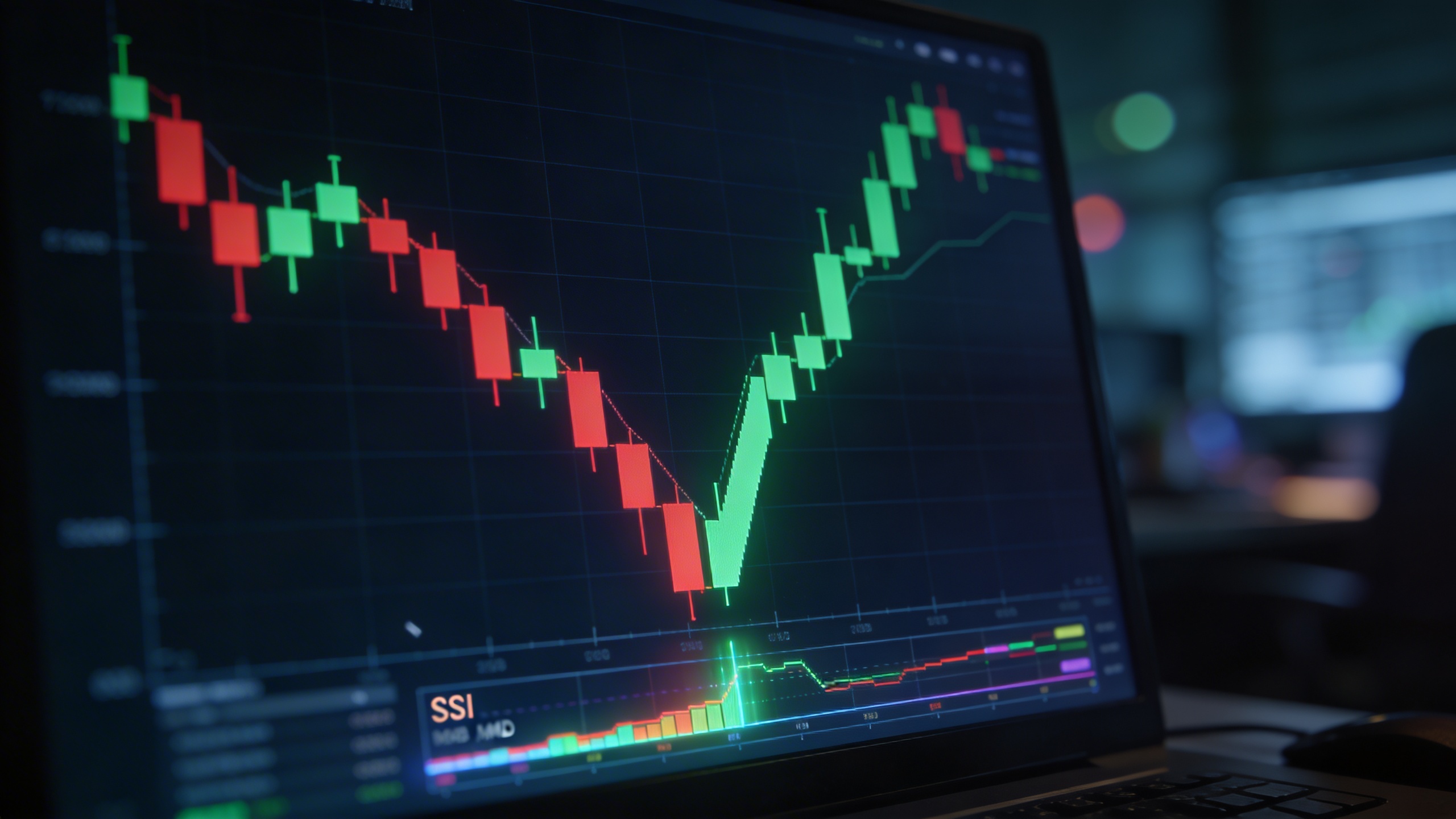
Oversold Bounce Trading: Crypto Futures Recovery Plays
Learn how to spot and trade oversold bounces in crypto futures using RSI, MACD, and volume signals to capture sharp recovery rallies.
Bitcoin just recorded its worst start to a year in over a decade, dropping more than 23% through the first 50 days of 2026. Then, almost overnight, BTCUSDT surged over 5% while ETHUSDT rallied nearly 10%. That kind of violent snap-back is what futures traders call an oversold bounce — and knowing how to trade it can be the difference between sitting on the sidelines and capturing one of the most profitable setups in crypto.
Why Oversold Bounces Happen
Markets are driven by emotion as much as by fundamentals. When selling pressure becomes extreme, traders who want to exit have already exited. Short sellers become overexposed. Funding rates turn deeply negative. At that point, even a small catalyst — a positive headline, a whale accumulating, or simply exhaustion of sell-side liquidity — triggers a rapid unwind.
In crypto futures, these bounces are amplified by liquidation cascades in reverse. As price ticks up, overleveraged shorts get stopped out or liquidated, which pushes price higher, which triggers more liquidations. The result is a sharp, fast recovery that can retrace 30-50% of the prior decline within hours.
How to Identify an Oversold Bounce Setup
Not every dip is a buying opportunity. The best oversold bounce setups share specific characteristics that you can identify using technical indicators and market structure.
RSI at Extreme Levels
The Relative Strength Index (RSI) is the most widely used oversold indicator. On the 4-hour or daily timeframe, look for RSI readings below 25 on major pairs like BTCUSDT or ETHUSDT. Readings below 20 on SOLUSDT or ADAUSDT signal extreme conditions that almost always precede a bounce.
The key is not to buy the moment RSI hits oversold territory. Wait for RSI to turn upward from below 30 — that uptick confirms buyers are stepping in.
MACD Bullish Divergence
When price makes a lower low but the MACD histogram prints a higher low, you have a bullish divergence. This is one of the most reliable signals that selling momentum is fading. Combine this with an RSI reading below 30, and the probability of a bounce increases significantly.
Volume Confirmation
A legitimate reversal needs volume behind it. Watch for a volume spike on a green candle after an extended decline. This shows real buying interest, not just short covering. If the bounce happens on thin volume, it is more likely a dead cat bounce that will fail.
Bollinger Band Squeeze After Expansion
After a sharp selloff, price often trades well below the lower Bollinger Band. When price starts to move back inside the bands — especially if the bands begin to contract — it signals that volatility is normalizing and a mean reversion is underway.
Building a Futures Bounce Strategy
Here is a practical framework for trading oversold bounces on crypto futures.
Entry criteria — all four conditions should align:
- RSI below 30 on the 4-hour chart, turning upward
- MACD histogram showing bullish divergence or crossover
- Volume above the 20-period average on the reversal candle
- Price reclaiming the lower Bollinger Band
Position sizing: Use smaller leverage than your normal trades. Bounces can be volatile and may retest the lows before continuing higher. A 3-5x leverage on Binance Futures keeps your liquidation price well below the recent low.
Stop loss: Place your stop just below the swing low that triggered the oversold reading. If that level breaks on high volume, the bounce thesis is invalidated.
Take profit: Target the 20 EMA on the same timeframe as your first take-profit level. If momentum is strong, trail your stop using the 50 EMA to capture more of the move. In the current recovery, BTCUSDT bounced from around $65,000 toward the $68,000-$70,000 zone — exactly the range where the 20 EMA sat on the daily chart.
How TraderSpy Gives You the Edge
Manually scanning dozens of pairs for oversold conditions across multiple timeframes is impractical. TraderSpy automates this entire process with precision and speed.
Compound alert presets let you build the exact bounce setup described above. Create an alert that fires only when RSI drops below 30 and MACD shows a bullish crossover and volume exceeds its 20-period average and price touches the lower Bollinger Band. With over 40 AI-powered alert presets, you can monitor every major futures pair simultaneously without staring at charts.
Smart Money tracking adds another layer of confirmation. Before entering a bounce trade, check whether top traders on Binance, Bybit, and Hyperliquid are accumulating. TraderSpy updates these positions every 2 seconds, so you see institutional moves as they happen — not minutes later.
The Market Insight dashboard provides the macro context you need. The Fear & Greed Index at extreme fear levels combined with your technical signals creates a high-conviction setup. The hot coins feature highlights which pairs are seeing the most activity, helping you pick the strongest bounce candidates.
If you trust your setup enough to automate it, Auto Trading on Binance Futures can execute your bounce strategy the moment conditions align — no hesitation, no emotional second-guessing.
Best Practices for Bounce Trading
Wait for confirmation. The most common mistake is buying too early. An oversold reading alone is not an entry signal. Wait for the reversal candle and volume confirmation.
Scale into positions. Rather than going all-in at one price, enter 50% at the initial signal and add the remaining 50% when the bounce holds above the first resistance level.
Know when the bounce is failing. If price reclaims the lower Bollinger Band but immediately falls back below it on increasing volume, exit quickly. Failed bounces often lead to accelerated selling.
Watch funding rates. Deeply negative funding rates on perpetual futures mean shorts are paying longs. When funding rates start normalizing from extreme negatives, it confirms that the short-heavy positioning is unwinding — fuel for your bounce trade.
Trade the strongest pairs. In the current rally, ETHUSDT gained nearly 10% while BTCUSDT gained 5%. Some altcoins like XRPUSDT and ADAUSDT outperformed even further. Focus your bounce trades on the pairs showing the most relative strength during the recovery.
The Key Takeaway
Oversold bounces are some of the highest-reward setups in crypto futures trading, but only when you enter with discipline and confirmation. The combination of RSI extremes, MACD divergence, volume spikes, and Bollinger Band reversions gives you a repeatable framework that works across market conditions.
The traders who profit from these setups are not the ones guessing the bottom. They are the ones with alerts set, Smart Money data flowing, and a plan ready to execute the moment conditions align. TraderSpy puts all of that in one place — so the next time the market panics, you are ready to act.