
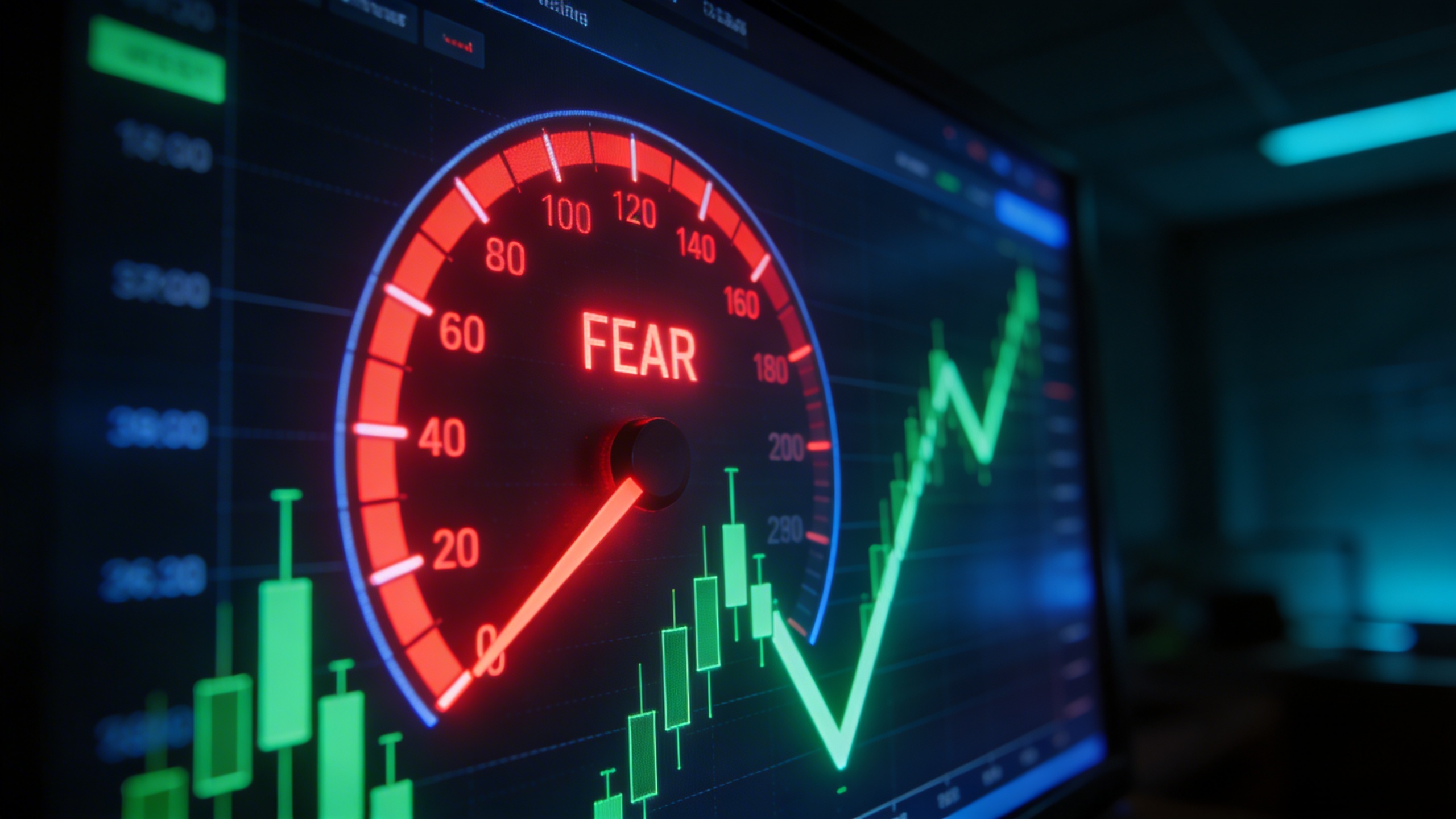
Extreme Fear Contrarian Strategy for Crypto Futures
Learn how to use extreme fear sentiment as a contrarian signal for crypto futures trading. Spot high-probability reversal setups when the crowd panics.
When Everyone Panics, Opportunity Follows
The crypto Fear & Greed Index has spent three consecutive weeks in Extreme Fear territory. Geopolitical shocks, leveraged liquidations, and bearish prediction markets have driven sentiment to levels not seen since the summer of 2022 — right before the cycle bottom formed.
For crypto futures traders, this kind of sustained fear is not a reason to run. It is a structured opportunity. Extreme fear readings have historically been among the most reliable contrarian signals available, but only when paired with disciplined technical confirmation.
Why Extreme Fear Creates Asymmetric Setups
Sentiment extremes distort price action. When the Fear & Greed Index drops below 20, it typically means weak hands have already sold, funding rates have turned deeply negative, and open interest has been flushed by cascading liquidations.
This creates an asymmetric risk-reward profile. The majority of forced selling has already happened. Remaining sellers have less ammunition. And any positive catalyst — a macro data beat, a geopolitical de-escalation, a whale accumulation signal — can trigger a violent short squeeze as overleveraged bears scramble to cover.
Consider the current environment. BTCUSDT dropped below $64,000 on a geopolitical shock, only to recover above $66,800 within 48 hours. ETHUSDT reclaimed $2,000 after briefly touching $1,870. SOLUSDT led the bounce with a 10.8% surge. These V-shaped recoveries during extreme fear are not random — they are the mechanical result of sentiment-driven overextension.
The Contrarian Playbook: Confirmation Over Conviction
Contrarian trading does not mean blindly buying every dip. The difference between a profitable contrarian and a reckless one is technical confirmation. Here is a structured approach to trading extreme fear in crypto futures.
Step 1: Confirm Sentiment Extreme
Check that the Fear & Greed Index is at or below 20. Look for corroborating data: negative funding rates across major exchanges, declining open interest (indicating liquidation flushes), and elevated put/call ratios.
Step 2: Wait for Divergence Signals
The most powerful contrarian entries occur when price makes a new low but momentum indicators refuse to confirm. Watch for bullish RSI divergence on the 4-hour or daily chart — price printing lower lows while RSI prints higher lows. Combine this with MACD histogram turning less negative, signaling that downward momentum is decelerating.
Step 3: Identify Volume Climax
Extreme fear often produces a volume climax — a massive spike in selling volume followed by a sharp reversal candle. This pattern appears on BTCUSDT and ETHUSDT during most major fear-driven selloffs. When you see a high-volume wick that reclaims a key support level, the flush is likely complete.
Step 4: Define Your Entry and Risk
Enter long positions on BTCUSDT or ETHUSDT futures when the following conditions align:
- Fear & Greed Index below 20
- Bullish RSI divergence on 4H or daily timeframe
- MACD crossover or histogram reversal
- Volume spike followed by bullish engulfing candle
- Price holding above a key EMA support (50 EMA or 200 EMA)
Set your stop-loss below the wick of the capitulation candle. Target the first major resistance level or the Bollinger Band midline as your initial take-profit zone.
Step 5: Scale Out, Don’t Get Greedy
Contrarian trades in extreme fear often produce rapid 5-15% moves. Take partial profits at the first resistance level. Move your stop to breakeven. Let the remaining position run toward the upper Bollinger Band or the next structural resistance.
How TraderSpy Gives You the Edge
Executing a contrarian fear strategy manually requires monitoring dozens of data points simultaneously. TraderSpy automates the hardest parts so you can focus on decision-making.
Market Insight Dashboard — TraderSpy’s Market Insight feature displays the Fear & Greed Index in real time alongside a derivatives heatmap, hot coins, and funding rate data. You see the sentiment picture at a glance without switching between five different websites.
Compound AI Alerts — Instead of watching charts for hours, set up compound alerts that fire only when multiple conditions align. For example, configure an alert that triggers when RSI drops below 30 AND MACD crosses bullish AND Volume exceeds the 20-period average AND Bollinger Bands contract below threshold. TraderSpy supports over 40 AI-powered alert presets with 5-10 second evaluation cycles, so you never miss the exact moment conditions converge.
Smart Money Tracking — During extreme fear, institutional and whale behavior diverges sharply from retail panic. TraderSpy’s Smart Money feature tracks top traders on Binance, Bybit, and Hyperliquid with 2-second updates. When extreme fear drives retail to sell but Smart Money starts accumulating, you have a high-conviction contrarian signal.
Auto Trading — For traders who want to execute without hesitation, TraderSpy’s Auto Trading feature connects to Binance Futures and can execute positions automatically when your alert conditions trigger. In fast-moving fear recoveries, speed matters — automated execution removes the emotional delay that causes traders to miss the best entries.
Risk Management in Fear Markets
Even the best contrarian setups require strict risk management. Follow these principles when trading extreme fear:
- Position size conservatively. Use 1-2% of your account per trade. Fear markets can produce false bounces before the real reversal.
- Use tight stops. Place stops below the capitulation wick. If that level breaks, the thesis is invalidated.
- Avoid maximum leverage. The same trader who lost $74 million overleveraging ETH longs is a reminder that conviction without risk control is just gambling. Use 3-5x leverage at most during high-volatility fear events.
- Trade liquid pairs only. Stick to BTCUSDT, ETHUSDT, and SOLUSDT during fear-driven setups. These pairs have the deepest order books and the tightest spreads during volatility.
- Monitor funding rates. Deeply negative funding rates confirm that the market is heavily short. This is bullish for a contrarian long. If funding flips positive quickly, it may signal that the easy money in the bounce has been made.
The Indicators That Matter Most
When building a contrarian fear strategy, prioritize these indicators in your analysis:
- RSI (14) — Look for readings below 30 with bullish divergence on 4H or daily
- MACD (12, 26, 9) — Watch for histogram reversal and signal line crossover
- Bollinger Bands (20, 2) — Price touching or piercing the lower band during extreme fear often precedes a mean-reversion move
- EMA 50 and EMA 200 — These act as dynamic support during pullbacks; reclaiming the 50 EMA after a fear flush is a strong bullish signal
- Volume — A volume spike 2-3x the average followed by a reversal candle confirms capitulation
- ADX — Readings above 25 during the selloff confirm a strong trend; a declining ADX after the flush signals the selling trend is losing steam
Getting Started With Your First Contrarian Setup
The current market presents a textbook opportunity. Extreme fear has persisted for weeks. Geopolitical uncertainty has driven forced liquidations. And early signs of a recovery bounce are visible on BTCUSDT and ETHUSDT.
Open TraderSpy and start by checking the Market Insight dashboard for the current Fear & Greed reading. Set up a compound alert combining RSI, MACD, and Volume conditions on your preferred pair. Enable Smart Money tracking to watch whether top traders are accumulating while retail panics.
The crowd is fearful. That is when the disciplined trader goes to work.